Garage door springs lose strength gradually, so a heavy door, a door that lifts crooked or an opener that strains are early warnings. In North Vancouver, damp garages rust springs and the first frost on the upper slopes often breaks a worn one. Check balance by hand, look for rust and gaps, and leave the door down if it is very heavy. Replacement takes about 1 to 2 hours.
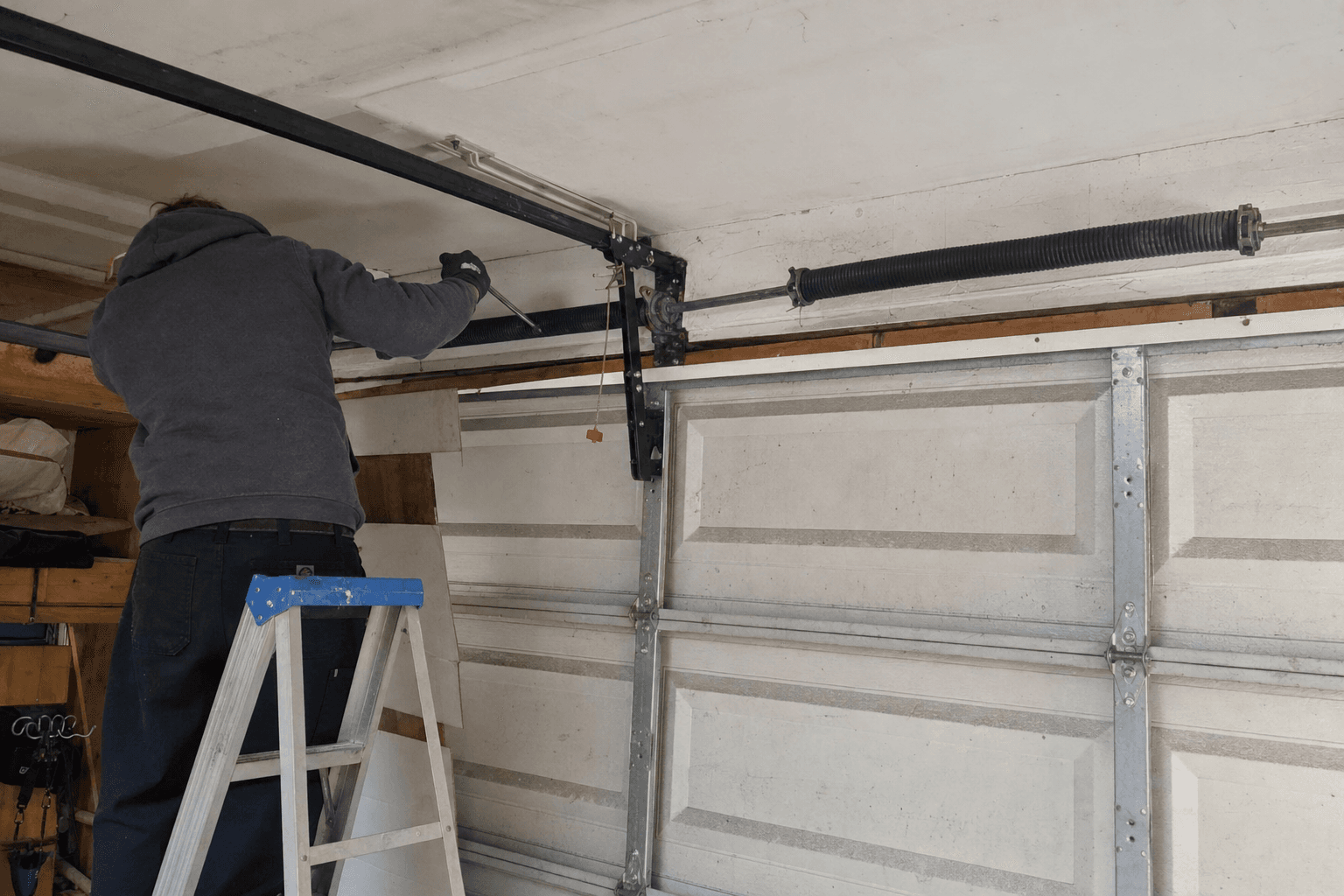
Springs wear out before they break
A garage door spring does not usually fail without warning. It loses strength over many open-and-close cycles, and the door slowly gets heavier, slower or crooked. In North Vancouver, the first cold snaps on the upper slopes are often what finish off a spring that was already tired. Late fall is a good time to look at yours, before Lynn Valley, Blueridge and Canyon Heights see their first frost.
This guide covers what to look for while the spring is still in one piece, and what a replacement involves when it is time.
Know which springs you have
Stand inside with the door closed and look up.
- Torsion springs sit on a steel bar above the door, mounted to the wall. They twist to lift the door. Most newer doors use them, and they run smoother.
- Extension springs run along the horizontal tracks on each side, above the door when it is open. They stretch to lift it. Many older doors, including some on post-and-beam homes in Edgemont and Capilano, still use them.
Both types carry the weight of the door. The opener only guides it.
Early signs a spring is near the end
The door feels heavier
Pull the release cord and lift the door by hand to waist height. A balanced door stays about where you leave it. If it drops, the springs have lost tension. If it feels very heavy, stop and lower it gently. A spring may already be broken.
One side lifts first
If one side of the door rises before the other, or the door goes up crooked, one spring or cable may be weaker. On sloped garage floors, common on steep North Shore driveways, a crooked door is easy to miss because it never sat level to begin with. Watch the top of the door, not the bottom.
The opener strains
An opener that labours, slows down or only lifts the door a few inches is often working against weak springs. Doors that have swollen in the damp add to the load.
Rust and stretched coils
Heavy rain and tree cover keep many North Vancouver garages damp, and rust forms on springs, tracks and rollers. Look for orange coils, flaking, or gaps opening between the coils of an extension spring when the door is closed.
Signs a spring has already broken
- a loud bang in the garage, often on a cold morning
- a visible gap in a torsion spring on the bar above the door
- cables hanging loose beside the door
- the door will not lift, or lifts only a few inches on the opener
If you see any of these, do not use the opener and do not try to lift the door. A broken spring leaves the whole weight on the cables, the opener and you.
Why this is not a do-it-yourself job
Torsion springs hold a lot of stored energy. Adjusting or replacing them means winding them with bars, and a slipped bar can cause serious injury. Extension springs can snap and whip if a safety cable is missing. This is a job for someone with the right tools.
What a replacement involves
A spring replacement takes about 1 to 2 hours. The usual steps:
- Secure the door so it cannot move.
- Release any tension left in the old springs and remove them.
- Fit new springs sized to the door's weight and height.
- Check the cables, drums and bearings, and replace worn ones.
- Set the tension so the door balances by hand.
- Run the door on the opener and test the safety reverse.
If your door has two springs, we usually replace both. They went in together and have done the same number of cycles, so the second one is usually close to failing. Most torsion spring replacements run $350 to $600 for a pair on a standard double door, including parts and labour. Extension spring jobs are often in a similar range. We give a quote before any work starts.
Standard or higher-cycle springs
Standard springs are typically rated for about 10,000 cycles, which is several years for most households. If you use the garage as your main entry, higher-cycle springs last longer.
A short fall checklist
- Do the hand-lift balance test once a month through the winter.
- Look for rust on springs and cables, especially if the garage stays damp.
- Keep the bottom seal clear of snow so the door is not frozen to the floor when the opener pulls on it.
- Book a yearly tune-up to check balance and lubricate the moving parts.