Check your garage door before the first hard frost by listening for noise, looking at the springs and cables from a safe distance, and doing a balance test with the opener disconnected. Lubricate rollers and hinges, then check the weatherstripping. Never touch the springs, cable brackets or bottom brackets. If the door is heavy, uneven or the spring has a gap, stop and call a professional.
Why check the door in October
Maple Ridge gets more rain than the western suburbs and colder winters. Outflow winds down the Fraser Valley bring hard frost and snow. Cold stiffens the door and puts extra stress on the springs.
Cold snaps bring a jump in spring breaks. Doors frozen to the floor are common after snow and ice. A short check now can show a weak spot while the weather is still mild.
Halloween is five days away, and the garage is likely getting more use than usual. It is a good time to look the door over.
What you need
You do not need much. Keep it simple.
- A flashlight
- A clean rag
- Garage door lubricant or silicone spray
- A plastic scraper for later in the season
You do not need wrenches or pliers. Nothing in this check involves adjusting the springs.
Step 1: Listen and watch
Close the door, then run it up and down with the opener a couple of times. Stand back and pay attention.
Note any grinding, popping or scraping. Watch whether both sides lift at the same speed. A door that goes up crooked, or one side that lifts first, points to a problem with the springs or cables.
Also notice how hard the opener works. If it strains or the door only lifts a few inches, stop using it. That usually means the springs are no longer carrying the weight.
Step 2: Look at the springs and cables
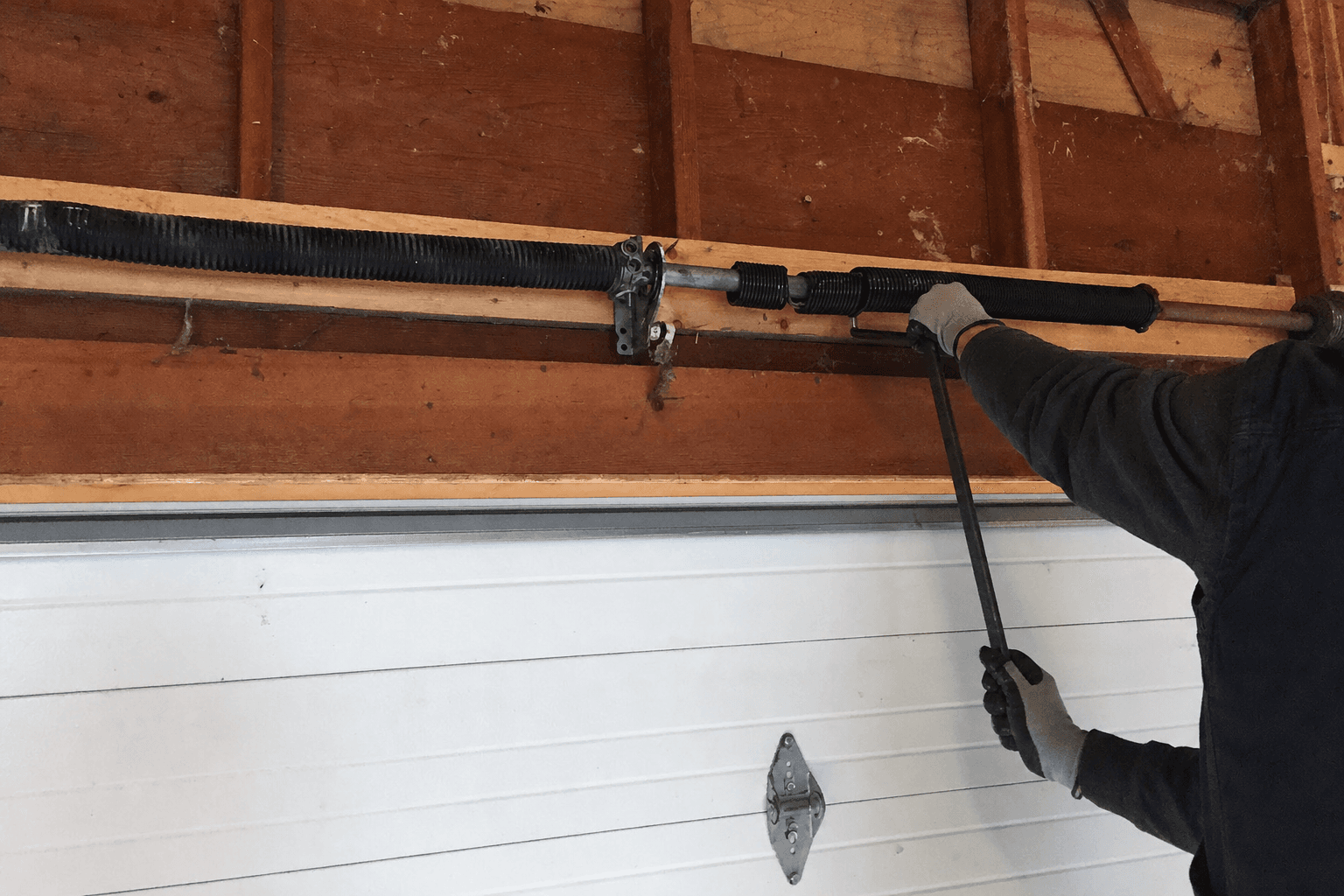
Use the flashlight to look at the spring above the door. Torsion springs sit on a bar over the opening. Extension springs run along the horizontal tracks on each side.
Look for a gap in the coil, rust or stretched sections. A gap means the spring has broken. Also look for cables that are frayed or hanging loose.
Look only. The springs and the cable brackets near the floor are under heavy tension. Do not touch, loosen or adjust them.
Step 3: Do a balance test
This test shows whether the springs are still doing their job.
- Close the door.
- Pull the red release cord to disconnect the opener.
- Lift the door by hand to about halfway.
- Let go slowly.
A balanced door stays roughly where you leave it. If it drops, or if it feels very heavy from the start, the spring tension is off or the spring has failed. Do not keep lifting it. Leave the door closed and reconnect the opener only when the door is confirmed safe to run.
If you are unsure, ask someone to help support the door. A door that is not balanced can fall quickly.
Step 4: Rollers, tracks and weatherstripping
Worn rollers are one of the common problems here. Look for rollers that wobble, flat spots, or rollers that no longer turn in the track.
Wipe the tracks clean with a rag. Do not grease the inside of the track. Spray lubricant on the hinges and the roller stems, then wipe off the extra.
Check the rubber seal along the bottom. Cracked or hard rubber is more likely to stick to the floor when it freezes. Gaps at the sides let in damp air, which matters on the shaded, forested north side of town.
Step 5: Check the opener
Openers can fail in cold. Make sure the wall button and the remote both work. Check that the safety sensors near the floor are lined up and the lights are on.
If the opener hums but the door does not move, or it starts and stops, turn it off. Sometimes the opener is blamed for a problem that is really a broken spring.
What to expect by neighbourhood
The age of the home often tells you what to look for.
- Haney and Hammond. Older homes and early industrial-era houses may have older doors and older openers. Wear shows up in rollers, hinges and cables.
- Cottonwood and Albion. Subdivisions from the 1980s to the 2000s often have original doors. Springs have had a lot of cycles by now.
- Silver Valley. Newer hillside homes and townhouses may have strata rules about doors. Check with the strata before you book any work.
- Whonnock and Thornhill. Acreages often have detached garages and shops. These doors can be forgotten until they stop working, so check them too.
If the door freezes shut
After snow and ice, a door can freeze to the floor. Do not keep pressing the opener. That can strain the opener, bend the door or break a part.
Clear snow and slush from the bottom edge. Use a plastic scraper on the ice, not a metal tool. Do not pour water on it, because it will refreeze.
Once the seal is free, lift the door by hand to see if it moves freely. If it does, reconnect the opener and test it. If it does not, stop and call for help.
When to call a professional
Call a professional if the spring has a gap, the cables are loose, the door is very heavy, or it lifts crooked. Do the same if you heard a loud bang in the garage. These are signs of a broken spring, and the work is done with specific tools because the spring holds the door's weight.
A spring replacement usually takes about 1 to 2 hours. We also do same-day visits for doors stuck shut when the schedule allows. If your check turns up nothing, you are in good shape for the colder weather.