If your garage door spring broke, stop using the opener and don't try to lift the door against it. Confirm the break by looking for a gap in the spring above the door. Keep clear of the spring and cables. Use the release only if you must. A replacement usually takes about 1 to 2 hours.
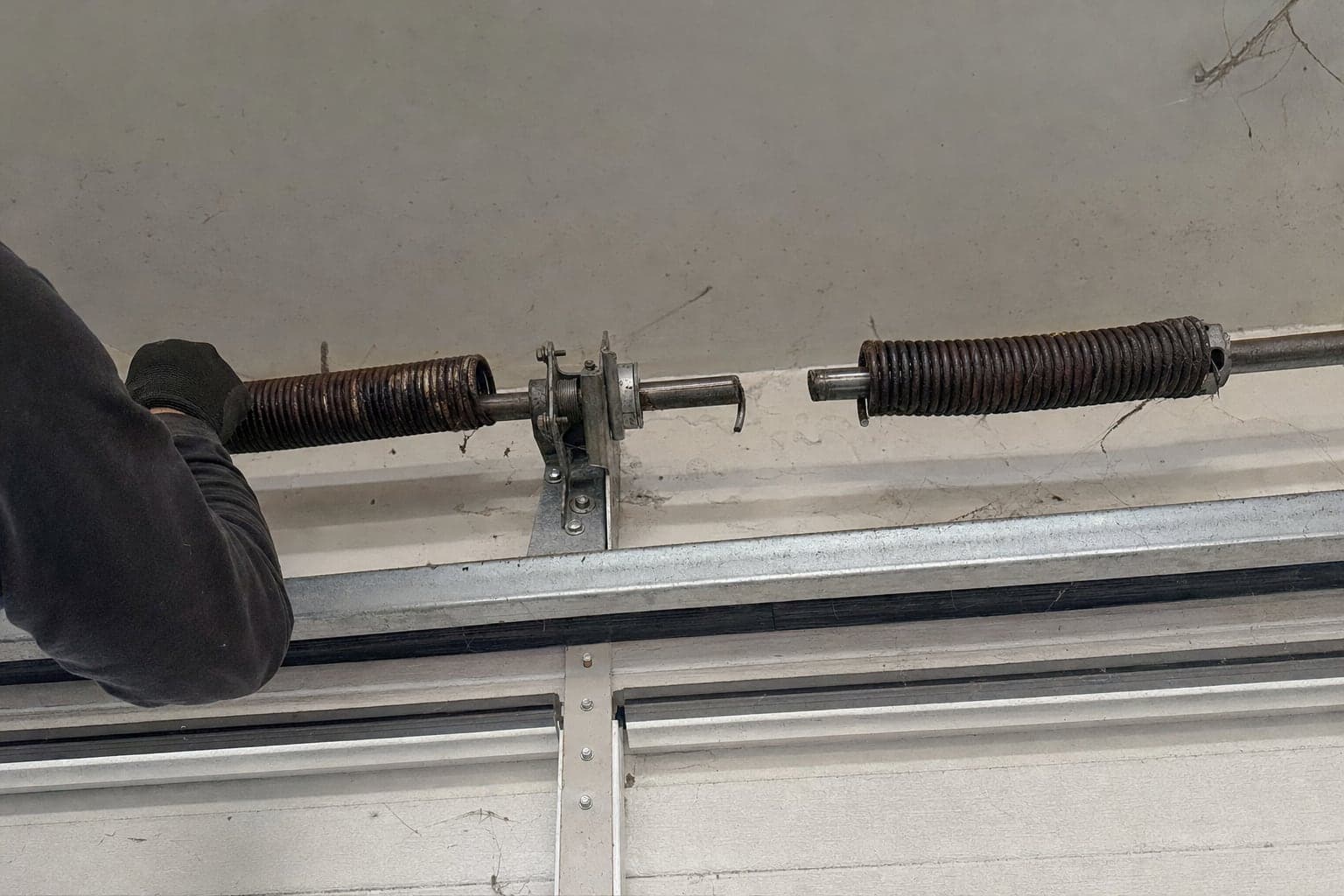
Is it really the spring?
Most people find out the same way. They hear a loud bang from the garage, then the door won't lift. If that sounds familiar, the spring is the first thing to check.
Here are the signs we hear about most often in Delta.
- A loud bang in the garage, often when nobody was near the door.
- A door that feels very heavy or won't lift by hand.
- A gap in the spring above the door.
- A door that goes up crooked, with one side lifting first.
- An opener that strains and only lifts the door a few inches.
- Cables hanging loose after the spring let go.
One of these on its own is worth a look. Two or three together almost always means a broken spring.
What the spring does
Your opener does not lift the door. The springs do. They carry the weight of the door so the opener only has to guide it up and down.
When a spring breaks, the opener suddenly has the whole weight to deal with. It was never built for that. That is why it strains, stalls, or lifts the door only a few inches.
What to do right after it breaks
Keep it simple and stay out of the way of anything under tension.
- Stop using the wall button and the remotes. Running the opener against a broken spring can wear it out or damage it.
- Look at the spring above the door from a distance. A visible gap confirms the break.
- Do not touch the spring, the cables, or the brackets at either end. They hold a lot of tension, even after a break.
- Leave the bottom brackets alone. Loose cables can whip or catch on something.
- Take note of what you see and hear so you can describe it on the phone.
Getting the car out
If the door is down and your car is inside, you may need to open it by hand. Pull the red emergency release cord only if the door is fully closed. Then lift with a helper, using the handles or the bottom edge, and go slowly.
If the door is already partway up, or the cables are loose, leave it. A heavy door with no spring can drop fast. It is better to wait for a visit than to risk a hand or a foot.
A door that is shut with your car outside is easier. Just leave it closed until it is fixed. With Halloween six days away, you may want the door working before the evening foot traffic starts, so book sooner rather than later.
Why springs break in Delta
Springs wear out with use. Every time the door goes up and down, the spring goes through a cycle. Older doors are simply closer to the end of that life.
Local conditions add to it.
- Salt air. Homes in Tsawwassen, Beach Grove and Boundary Bay get salt air that rusts springs and cables. Rust weakens the metal and a rusty spring breaks sooner.
- Cold snaps. Cold weather is a common time for a worn spring to give out. Autumn and winter bring more of these calls.
- Older doors. Many Ladner ranchers have older doors and openers. Springs that have been working for decades are the ones that fail.
- Wind and wear. Wind off the water drives rain under worn bottom seals, which can add moisture to hardware inside the garage.
North Delta is a little different. Many of the 1960s to 1980s split-levels and basement-entry homes have garages under the living space. The door is often used daily, and it gets less airflow than a detached garage. Check the hardware when the weather turns.
Torsion or extension spring
There are two main types. A torsion spring sits on a bar above the door. An extension spring runs along the side tracks, one on each side.
Both do the same job. Both can fail. Replacing them means releasing and setting tension, and that is where the danger is. A torsion spring is wound with special bars. An extension spring stretches with cables that can snap back.
Why replacement is not a DIY job
The springs carry the door's weight. That is the whole point of them, and it is why a mistake can hurt someone. Winding bars slip. Brackets give way. Cables lash out.
It also matters that the tension is right. If it is too loose, the door is heavy and the opener strains. If it is too tight, the door can fly up or wear out the parts. The goal is a door that stays put when you lift it halfway.
If you have two springs and only one broke, it is usually smart to replace both. The second one has done the same number of cycles and is often close behind.
What a replacement visit involves
We replace broken torsion and extension springs and set the tension so the door balances properly. The visit usually takes about 1 to 2 hours.
We also look at the cables, the rollers and the opener while we are there. Loose cables after a spring break are common. A rusty cable near the water is worth replacing at the same time.
We can often come the same day for doors stuck shut, when the schedule allows.
Reducing the chance of a repeat
- Look at the spring and cables a couple of times a year. Rust or fraying is an early warning.
- Near the water, wipe down visible hardware and check for salt build-up.
- Replace worn bottom seals so wind and rain do not reach the hardware.
- Watch for a door that gets harder to lift or starts to go up crooked.
When to call a professional
If you have heard a bang, see a gap in the spring, or the door will not lift, it makes sense to call. Do it before you try to force the door. If you are in Ladner, Tsawwassen, North Delta or anywhere else in Delta and you are unsure what you are looking at, describe what you see and we can tell you whether it sounds like a spring.