To tell whether the opener or the door is at fault, pull the emergency release and lift the door by hand. If it is heavy, sticks or drops, the door, springs or hardware are the problem. If it runs smoothly and stays put, check the safety sensors, then the opener itself. In Richmond, heavy double doors, rust from damp air and sensors out of line are the usual causes.
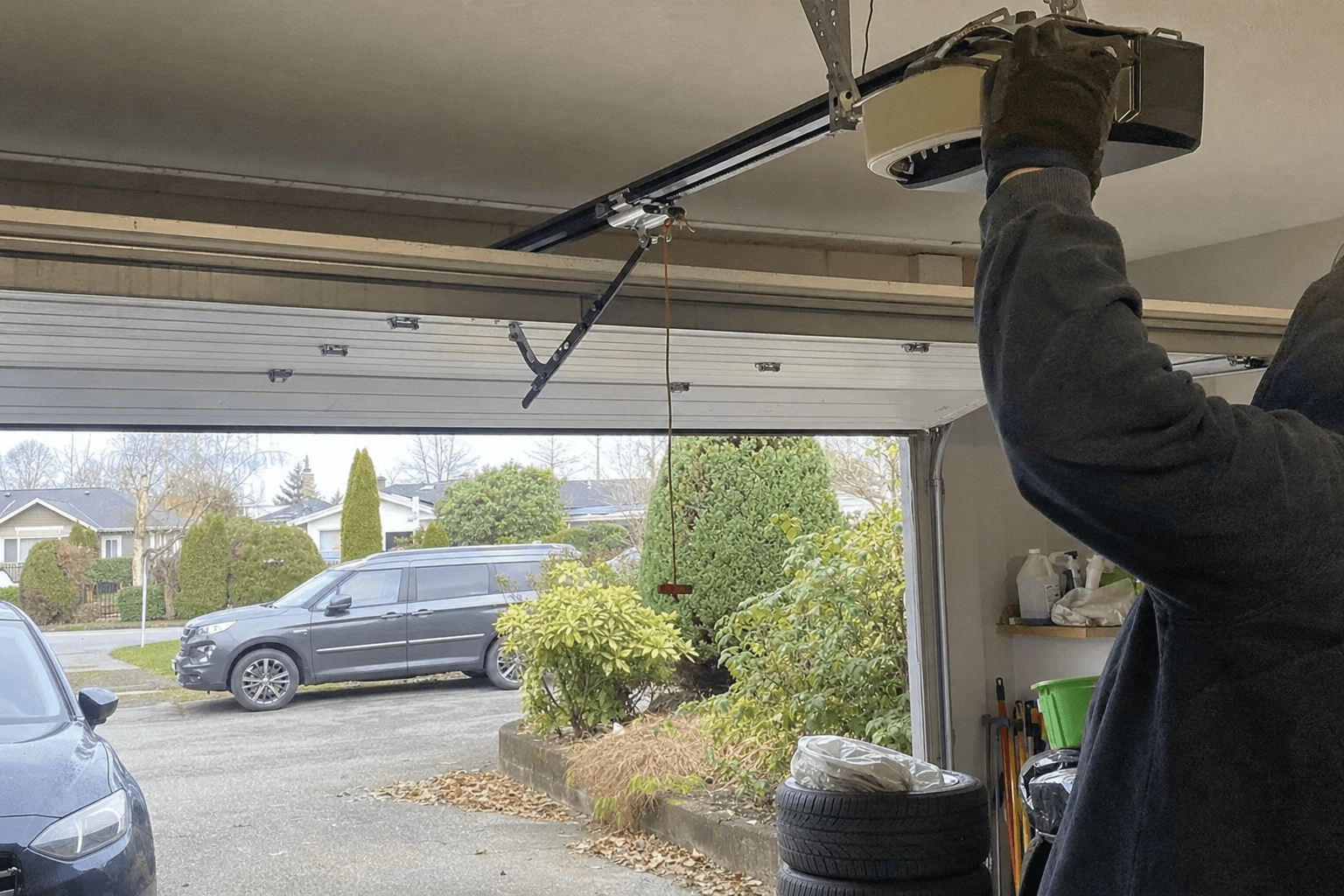
Start with the door, not the motor
When a garage door stops working, most people blame the opener. Often the opener is fine and the door is the problem. A door that is hard to lift, rubbing in its tracks or out of balance will make any opener strain, reverse or quit. That is why we check the whole door before touching the opener, and it is a check you can start yourself in about ten minutes.
In Richmond this matters more than usual. Many homes in Broadmoor, Seafair, Blundell and Terra Nova have large double or triple garages with heavier insulated doors. Those doors put a lot of load on an opener, and the damp air off the delta works on the hardware all year.
Step one: run the door by hand
Close the door with the opener. Then pull the red emergency release cord so the door is disconnected from the opener carriage.
Now lift the door by hand.
- It lifts smoothly and stays put at waist height: the door is balanced. Your problem is more likely in the opener, its settings or its sensors.
- It is very heavy or will not lift: stop. A spring is probably broken. Leave the door down and do not use the opener, because it cannot lift the full weight.
- It shoots up or drops fast: the springs are out of adjustment.
- It grinds, sticks or jerks at one spot: look at the rollers, hinges and tracks.
When you are done, pull the door down by hand and reconnect it to the opener. Most openers re-engage when you run them once.
Step two: look at the hardware
With the light on, look along both tracks and at the top of the door.
- Rust: Richmond's high water table and damp air rust tracks, hinges and springs faster than in drier cities. Rusty rollers drag and make the opener work harder.
- Cables: a frayed or loose cable at the bottom corners is a door problem, and a safety one.
- Bottom seal: on flat lots, water pools at the door when the seal is worn. A swollen or torn seal can stop the door from closing evenly.
Step three: check the safety sensors
If the door starts down and then goes right back up, the safety sensors are the first suspect. They sit a few inches above the floor on each side of the opening.
- Wipe both lenses with a soft cloth.
- Look at the small lights on each sensor. If one is off or blinking, they are out of line.
- Gently adjust the bracket until both lights are steady.
- Make sure nothing is in the beam, like a recycling bin or a coat on the floor.
Sensors out of line are one of the most common problems we see in Richmond, often because a bracket got knocked or the wall is damp and the mount has loosened.
Signs it really is the opener
Once the door runs well by hand and the sensors are clear, these point to the opener:
- the motor hums but the carriage does not move, which often means a stripped drive gear
- lights on the unit blink and nothing happens
- the door stops part way, or the travel and close settings seem off
- a grinding noise from the motor head itself, not the door
- it works sometimes and not others, even with good remote batteries
Most opener repairs come down to a few parts such as the sensors, gears, logic board or limit settings. They run $150 to $400 depending on the part and take about 1 to 2 hours. If the opener is old and the repair is a major part, replacing it can make more sense. Openers from before 1993 lack the required safety reversing sensors and are better replaced.
When to stop and call
- The door feels very heavy, or you heard a loud bang in the garage.
- A cable is loose or a spring has a visible gap.
- The door is crooked or a roller has come out of the track.
- You have tried the sensors and the door still reverses.
It helps to know the opener brand and its rough age when you book, so the right parts come on the first visit. We give a quote before any work starts, and if the opener is fine and the door needs the repair, we will tell you that.